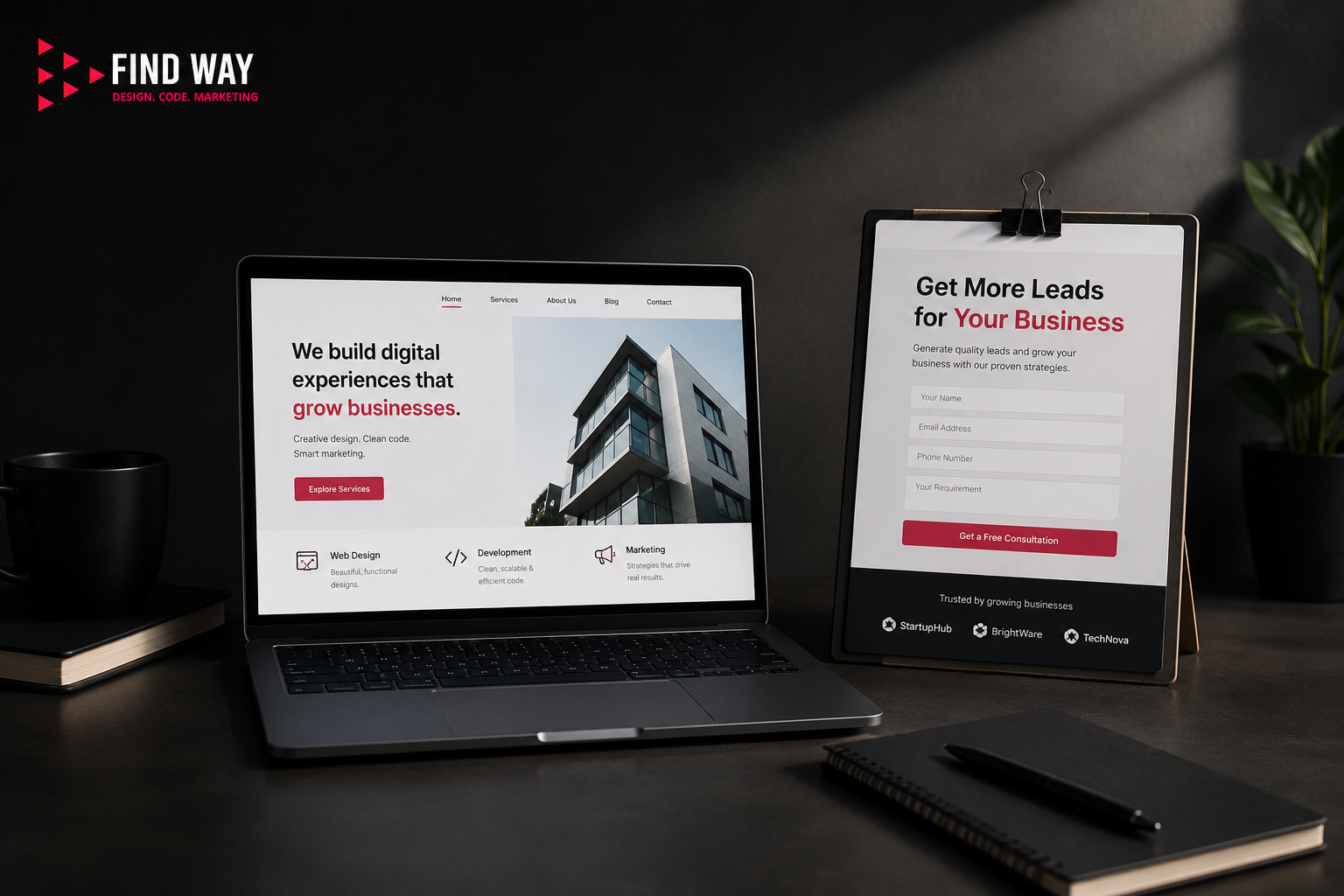
Website vs Landing Page: Which One Does Your Business Actually Need in 2026?
Many businesses start investing in digital marketing before deciding whether they need a full website or simply a landing page. They launch advertising campaigns, publish social media content, or hire designers, only to realise later that their digital foundation doesn't align with their business goals.
This decision influences far more than design. It affects your SEO performance, Google rankings, visibility in AI-powered search platforms, customer trust, lead quality, conversion rates, and long-term business growth.
Choosing the wrong solution often results in wasted advertising spend, lower conversions, and unnecessary redevelopment costs. Understanding when to use a website, a landing page, or both helps you invest in the right digital asset from the beginning.
Website vs Landing Page: What's the Difference?
A website is a complete online presence made up of multiple interconnected pages. It represents your business, explains your products or services, builds credibility, and helps visitors learn more about your brand.
A business website typically includes:
- Home page
- About Us
- Service or Product pages
- Blog
- FAQ section
- Contact page
- Resources or Careers (where applicable)
With clear navigation, internal links, and well-structured content, websites help search engines and AI platforms understand your business. Over time, they become valuable assets for SEO, content marketing, and long-term brand authority.
A landing page, on the other hand, is a single page created with one specific objective. It removes unnecessary navigation and distractions so visitors focus on a single action—such as submitting an enquiry, booking an appointment, downloading a brochure, or making a purchase.
Landing pages are commonly used for paid advertising because every section is designed to increase conversion rates.
When Does Your Business Need a Website?
A website becomes essential when your business offers multiple services, targets long-term growth, or wants to establish a strong online presence.
Dedicated service pages allow potential customers to find exactly what they need while giving search engines more opportunities to rank your content. Publishing blogs, case studies, FAQs, and educational resources also strengthens your authority within your industry.
In 2026, search behaviour has evolved beyond traditional search engines. AI-powered platforms such as Google AI Overview, ChatGPT, Gemini, and Perplexity increasingly generate answers using information from well-structured websites. Businesses that publish helpful, organised, and trustworthy content have a greater chance of being referenced in these AI-generated responses.
Technical optimisation also plays an important role. Features such as Core Web Vitals, schema markup, internal linking, and structured content improve both search visibility and user experience.
A complete website is particularly valuable for:
- Local businesses
- Healthcare providers
- Educational institutions
- Manufacturers
- Professional service companies
- E-commerce businesses
For organisations where trust and detailed information influence purchasing decisions, a website is no longer optional—it's a long-term business asset.
When Should You Choose a Landing Page?
A landing page is the right choice when your goal is to encourage visitors to complete one specific action.
Whether you're collecting enquiries, scheduling appointments, promoting a limited-time offer, or selling a single product, a landing page keeps visitors focused on that objective without unnecessary distractions.
Landing pages work exceptionally well with:
- Google Ads campaigns
- Meta Ads
- Product launches
- Seasonal promotions
- Webinar registrations
- Event sign-ups
- Appointment booking campaigns
Because they eliminate competing navigation and unnecessary information, landing pages often achieve significantly higher conversion rates than standard website pages for paid traffic.
They're also quicker and more cost-effective to build, making them ideal for testing campaigns before investing in a larger website.
If your immediate priority is lead generation rather than long-term SEO, a dedicated landing page is often the better investment.
Website vs Landing Page Comparison
|
Factor |
Website |
Landing Page |
|
Primary Purpose |
Brand building, SEO, long-term growth |
Single conversion objective |
|
Structure |
Multiple pages |
Single page |
|
SEO Potential |
Strong |
Limited |
|
Navigation |
Full navigation and internal links |
Minimal or no navigation |
|
Conversion Focus |
Multiple goals |
One clear goal |
|
Best For |
Organic traffic and credibility |
Paid campaigns and promotions |
|
Development Cost |
Higher initial investment |
Faster and more affordable |
|
Long-Term Value |
Continues growing over time |
Campaign-specific |
Can You Use Both Together?
Absolutely.
Most successful businesses combine both assets because they serve different purposes.
Your website acts as your long-term digital headquarters. It attracts organic traffic, builds trust, supports SEO, and establishes your expertise.
Landing pages complement the website by converting paid traffic into leads or customers. Instead of sending advertising visitors through multiple pages, businesses direct them to focused landing pages designed specifically for that campaign.
Together, they create a balanced digital marketing strategy where:
- The website builds authority.
- Landing pages maximise conversions.
- SEO generates consistent long-term traffic.
- Paid advertising delivers immediate results.
Rather than replacing one another, websites and landing pages work best when used together.
Why This Decision Matters More in 2026
Digital search is changing rapidly.
Instead of browsing multiple websites, many users now receive direct answers from AI-powered search experiences. Businesses with detailed service pages, structured FAQs, helpful content, and clear topical authority are far more likely to appear in these AI-generated responses.
Landing pages rarely contribute to this visibility because they're intentionally built around a single campaign rather than comprehensive information.
Advertising platforms have become increasingly competitive, making it more expensive for businesses to attract qualified visitors. Sending expensive paid traffic to a general website often reduces conversion rates because visitors encounter too many choices.
Matching the right digital asset with the right traffic source has become one of the most important factors in improving marketing ROI.
At Findway Digital, we help businesses determine whether they need a high-converting landing page, a scalable business website, or a combination of both. Our recommendations are based on business objectives—not one-size-fits-all solutions.
Conclusion
A website and a landing page solve different business challenges.
A website supports long-term SEO, builds credibility, strengthens your online presence, and improves visibility across both traditional and AI-powered search.
A landing page focuses on one objective—turning visitors into leads or customers through a streamlined conversion experience.
For most businesses, the strongest digital strategy combines both. Your website builds lasting authority, while dedicated landing pages maximise campaign performance.
Before investing in digital marketing, identify your primary objective. If you're aiming for sustainable online growth, invest in a strong website. If your priority is generating leads from a specific campaign, a landing page may deliver faster results. Choosing the right foundation ensures your marketing budget produces measurable business outcomes rather than unnecessary expenses.
Frequently Asked Questions
How does a website differ from a landing page?
A website consists of multiple interconnected pages that represent your entire business and support long-term SEO. A landing page is a single page designed around one specific conversion goal, such as lead generation or appointment booking.
Which is better for SEO?
A website offers significantly greater SEO potential because it supports content marketing, internal linking, technical optimisation, and topical authority. Landing pages generally have limited SEO value since they focus on a single campaign.
Do small businesses need a website or just a landing page?
Most small businesses benefit from having a professional website because it improves credibility and helps customers discover them through search engines. Landing pages are best used alongside a website for marketing campaigns rather than replacing it.
Do Google Ads always require a website?
No. Google Ads can direct visitors to either a dedicated landing page or a website. In many cases, a well-optimised landing page delivers better conversion rates because it is designed around a single objective and removes unnecessary distractions.
Should I have both a website and a landing page?
In most cases, yes. A website supports organic growth, brand authority, and AI search visibility, while landing pages improve conversions for paid campaigns and promotional offers. Using both creates a more effective and balanced digital marketing strategy.