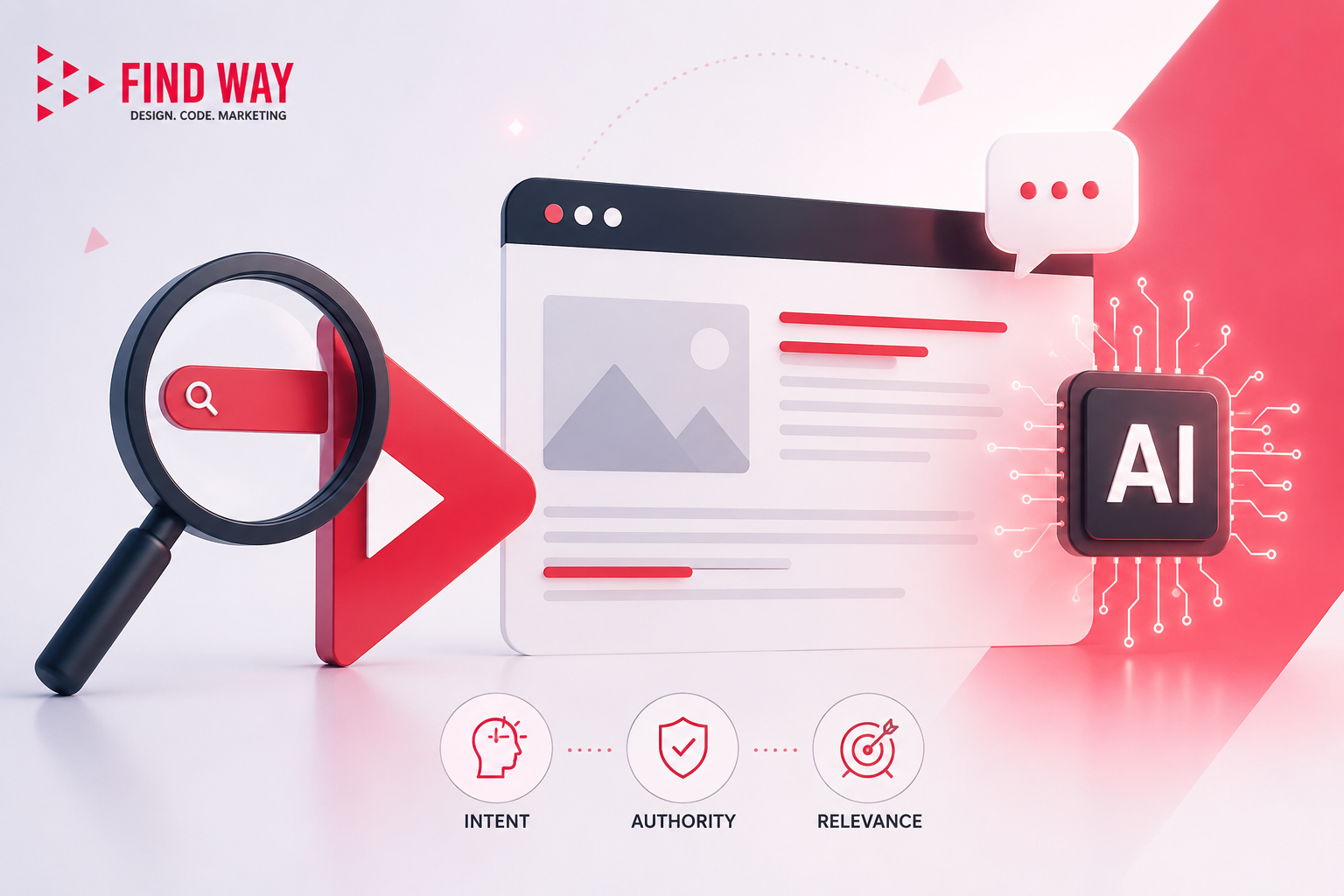
Beyond Keywords: How to Optimize Your Custom Website for AI Search Engines
Search has changed — and if you're still optimizing purely for keywords, you're already playing catch-up.
Today, millions of people get answers from AI-generated summaries before they ever click a link. Google AI Overviews, ChatGPT Search, Gemini, and Perplexity are now the first stop for countless queries. If your website isn't built for this shift, you're invisible to a growing slice of your audience.
Why AI Search Engines Think Differently
Traditional search engines ranked pages. AI search engines understand them.
When someone asks ChatGPT "best practices for small business websites in 2026," it doesn't scan for keyword density. It looks for context, authority, and genuinely useful answers — then synthesizes a response from trusted sources.
Google AI Overviews works similarly, pulling structured, credible content to surface at the top before organic results. Perplexity and Gemini prioritize sources that demonstrate clear expertise and answer questions directly. The result? Conversational search has fundamentally changed what "ranking" even means.
Key Elements of an AI-Friendly Website
Create Content Around Questions
AI search engines are built on question-answering. If your content doesn't address what real users are asking, it won't be cited.
Write pages that directly answer "how," "why," and "what" questions in your niche. Think in terms of user intent — what problem is someone trying to solve? Lead with the answer, then support it with detail.
Build Topic Authority
A single great article won't cut it anymore. AI systems favor websites that demonstrate depth across a subject — not just one-off posts.
Build content clusters: a core pillar page supported by related subtopics that link to each other. This signals topical authority and helps AI engines understand that your site is a reliable resource worth citing.
Improve Website Structure
Clear, logical structure makes your content easier for AI to parse and recommend.
Focus on:
- Intuitive navigation so both users and crawlers can find content easily
- Internal linking that connects related pages with descriptive anchor text
- Schema markup (FAQ, Article, Organization, and LocalBusiness schemas) to give AI engines structured data they can extract
- Semantic HTML using proper heading hierarchies (H1, H2, H3) that reflect content organization
Optimize for User Experience
AI search engines don't just read your content — they evaluate how users experience it.
Ensure your website is fully mobile-responsive, loads in under 2.5 seconds, and passes Core Web Vitals benchmarks. Slow, clunky websites rarely get cited in AI Overviews, regardless of content quality.
Demonstrate Trust Signals
AI systems prioritize credible sources. Trust signals tell them your site is worth recommending.
Include visible author bios with credentials, client reviews and testimonials, case studies with real outcomes, and clear contact information. These EEAT (Experience, Expertise, Authoritativeness, Trustworthiness) signals directly influence whether AI tools surface your content.
Why Custom Websites Have an Advantage in AI Search
Off-the-shelf website builders have limits — and those limits show up in AI search performance.
Custom-built websites can be engineered from the ground up for speed, semantic structure, and advanced schema implementation. They scale cleanly as your content strategy grows, and they give developers precise control over technical SEO elements that templates simply can't match.
That's where Findway Digital comes in. As a Madurai-based custom website development agency, they build sites optimized not just for traditional search, but for the AI-driven search landscape businesses are navigating right now.
Future-Proofing Your Website for AI Search
Here are practical steps you can take today:
- Audit your content for question-intent alignment — reframe pages to directly answer user queries.
- Add structured schema markup across all key pages.
- Build internal links between related content to establish topical depth.
- Run a Core Web Vitals check and fix speed or layout issues.
- Create or update author pages with real credentials and experience.
If your current site makes these upgrades difficult, it may be time for a rebuild. Findway Digital specializes in custom website development designed to perform in both traditional and AI-driven search environments — helping businesses in Madurai and beyond stay visible as the search landscape evolves.
Conclusion
The era of keyword stuffing is over. AI search engines reward websites that are structured, authoritative, fast, and genuinely helpful. User intent optimization isn't a future strategy — it's what you need now.
Businesses that invest in AI-friendly websites today will hold a significant advantage as conversational search becomes the default. Start with your content, build your structure, and make sure your website is ready to be cited — not just crawled.
Frequently Asked Questions
What is AI search optimization?
AI search optimization is the process of improving your website so AI-powered platforms like Google AI Overviews, ChatGPT Search, Gemini, and Perplexity can understand, trust, and cite your content. It focuses on user intent, content quality, structured data, and topical authority rather than keyword density.
How is AI SEO different from traditional SEO?
Traditional SEO aims to improve rankings in search results through keywords, backlinks, and technical optimization. AI SEO focuses on helping AI systems understand your content, answer user questions accurately, and recognize your website as a trustworthy source for generated responses.
Why does website structure matter for AI search engines?
A clear website structure helps AI search engines understand your content and relationships between pages. Proper headings, internal links, semantic HTML, and schema markup make it easier for AI systems to extract information and present it accurately in search results.
Can a custom website perform better in AI search results?
Yes. Custom websites offer greater control over page speed, user experience, schema implementation, and content organization. These factors help AI search engines understand your website more effectively and improve the chances of your content being cited in AI-generated answers.
How can I improve my chances of appearing in Google AI Overviews?
Create content that directly answers user questions, organize information clearly, implement relevant schema markup, and build topical authority around your industry. Websites that provide accurate, helpful, and well-structured information are more likely to be featured in Google AI Overviews.