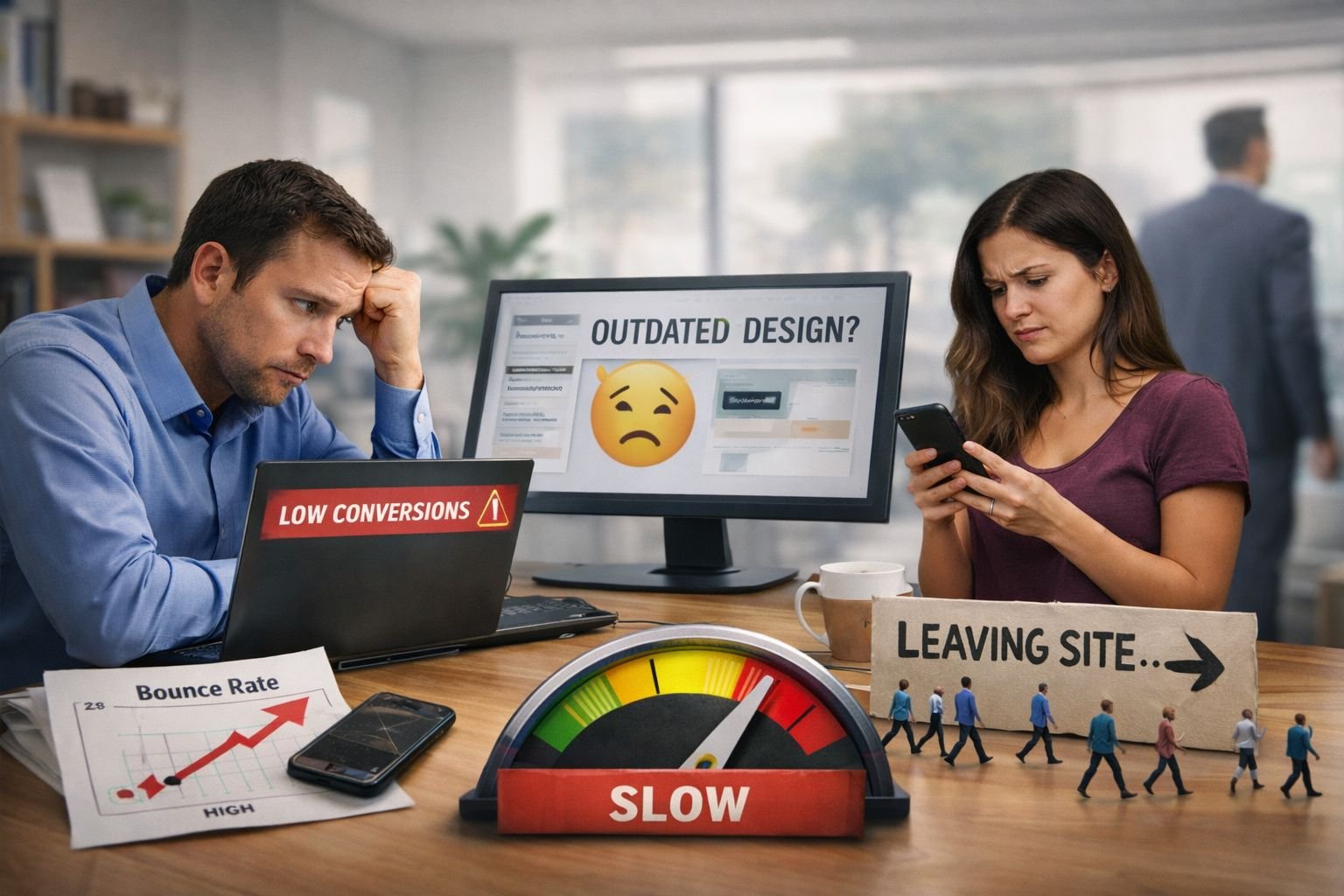
Website Redesign in 2026: 7 Signs Your Business Is Losing Customers Due to Poor UX
In the modern digital landscape, a company’s website is usually the first place where potential customers interact with the brand. But if your website offers a poor user experience (UX), visitors may leave before they even explore your services.
Many businesses invest heavily in marketing to bring visitors to their websites, yet they fail to convert those visitors into customers. The problem often lies in the website’s design, usability, and performance. Studies show that 88% of online consumers are less likely to return to a website after a bad user experience, which means poor UX can permanently drive away potential customers.
As user expectations continue to evolve in 2026, businesses that fail to update their websites risk losing leads, sales, and credibility. If you’re wondering whether your website needs an upgrade, here are seven clear signs your business may be losing customers due to poor UX.
1. Your Website Loads Too Slowly
Website speed plays a critical role in user experience. Visitors expect websites to load almost instantly, and even small delays can cause frustration. Research indicates that a one-second delay in page load time can reduce conversions by around 7%, showing how strongly speed impacts customer behavior.
Slow loading pages often lead to higher bounce rates, meaning visitors leave before engaging with your content. If your website takes too long to load, potential customers may simply move on to a competitor with a faster site.
A modern website redesign focuses on performance optimization, including faster servers, optimized images, and cleaner code to deliver a smoother browsing experience.
2. Your Website Is Not Mobile-Friendly
In 2026, most users browse websites from mobile devices. If your website does not adapt properly to smartphones or tablets, visitors will struggle to navigate it.
Poor mobile design can lead to issues such as tiny text, buttons that are hard to tap, and layouts that break on smaller screens. These problems create frustration and cause users to abandon the site quickly. Mobile users are particularly sensitive to poor design and slow performance.
A responsive, mobile-first design is essential for keeping visitors engaged and ensuring they can easily interact with your website.
3. Visitors Leave Without Taking Action
If your website receives traffic but few people fill out forms, make purchases, or contact your business, it may indicate a UX problem.
Low conversion rates often occur when websites lack clear calls-to-action, confusing layouts, or complicated user journeys. Even if visitors are interested in your product or service, a difficult website experience can prevent them from taking the next step.
Poor UX can act like a “silent tax” on revenue, causing businesses to lose potential customers through abandoned actions and incomplete transactions.
A well-designed website guides users toward actions with clear messaging and intuitive navigation.
4. Your Website Navigation Is Confusing
Navigation is the backbone of user experience. If users struggle to locate the information they need quickly, they are more likely to leave the website.
Confusing menus, too many options, broken links, or poorly structured pages make it difficult for users to explore your website. When navigation becomes complicated, visitors experience frustration and abandon the site before discovering your offerings.
A modern website redesign focuses on simplifying navigation, ensuring users can reach important pages quickly and easily.
5. Your Website Looks Outdated
Design trends and user expectations evolve rapidly. A website that looked modern five years ago may now appear outdated and untrustworthy.
Outdated layouts, inconsistent design elements, and old visuals can harm your brand perception. When visitors land on a site that looks old or poorly designed, they may question the credibility of the business behind it.
A redesign allows businesses to refresh their brand, implement modern design standards, and create a professional online presence that builds trust with customers.
6. Your Conversion Rate Is Declining
One of the biggest warning signs that your website needs a redesign is declining conversion rates.
You may still be getting traffic from search engines, social media, or ads, but fewer visitors are converting into leads or customers. This often indicates that your website experience does not align with modern user expectations.
Studies suggest that businesses can lose up to 35% of potential sales due to poor user experience, highlighting how critical UX is to revenue growth.
Improving UX design can dramatically increase conversions and customer engagement.
7. Your Competitors Have Better User Experience
If your competitors’ websites feel easier to use, faster, and more visually appealing, potential customers may choose them over your business.
A modern website with intuitive design, smooth navigation, and clear messaging creates a positive impression and builds trust instantly. When competitors provide a better online experience, users are more likely to engage with their brand.
This is why many businesses invest in regular website redesigns to stay competitive in a rapidly evolving digital landscape.
How a Website Redesign Can Improve Customer Experience
A strategic website redesign does more than change the visual appearance of a site. It improves the entire customer journey.
Modern UX-focused redesigns typically include:
- Faster loading speeds
- Mobile-first responsive design
- Simplified navigation
- Clear calls-to-action
- Conversion-focused layouts
Many digital growth agencies now focus on combining UX design, performance optimization, and SEO to create websites that not only look better but also generate more leads. For example, agencies like Findway Digital help businesses redesign their websites with a strong focus on user experience and conversion optimization.
Conclusion
In 2026, businesses cannot afford to ignore user experience. A poorly designed website can drive away visitors, reduce conversions, and ultimately impact revenue.
Slow loading pages, confusing navigation, outdated design, and poor mobile performance are all clear signs that your website may be losing customers.
By investing in a modern website redesign focused on UX, businesses can create faster, more intuitive digital experiences that keep visitors engaged and turn them into loyal customers.
FAQ
1. How can I tell if my website needs a redesign?
A website may need a redesign if it loads slowly, is not mobile-friendly, has outdated design elements, or receives traffic but generates very few leads or conversions. Poor navigation and high bounce rates are also strong indicators that the user experience needs improvement.
2. Why is user experience (UX) important for business websites?
User experience greatly influences how visitors navigate and engage with a website.A well-designed UX makes it easy for users to navigate, find information, and complete actions such as contacting the business or making a purchase. Poor UX can frustrate users and cause them to leave the website quickly.
3. How does poor UX affect customer conversions?
Poor UX can reduce conversions by making it difficult for visitors to complete actions. Slow page speed, confusing layouts, and unclear calls-to-action often lead to abandoned sessions, meaning potential customers leave the site before engaging with the business.
4. How often should a business redesign its website?
Businesses typically benefit from refreshing or redesigning their website every three to five years. This helps ensure the website stays aligned with modern design trends, mobile usability standards, and evolving customer expectations.
5. Can a website redesign improve SEO and search rankings?
Yes, a website redesign can improve SEO by optimizing site speed, mobile responsiveness, navigation structure, and content organization. A well-structured website also helps search engines crawl pages more effectively and improves overall user engagement.