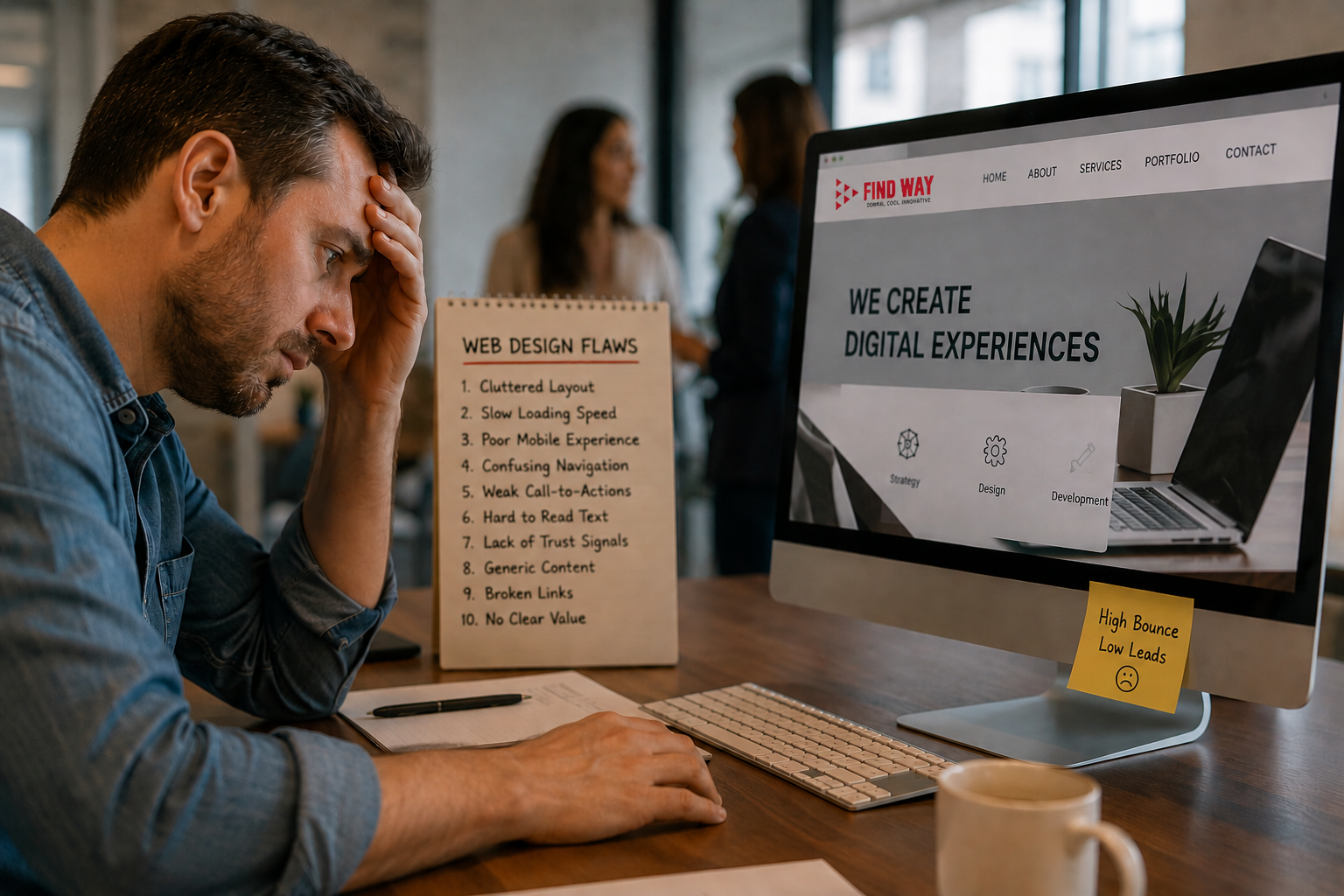
10 Sneaky Web Design Flaws That Are Quietly Killing Your Inbound Leads
The website that you create represents your company’s first impression to many potential customers. It is the digital version of your storefront, salesman, and customer support representative. A number of companies are expending great resources on digital marketing in order to drive traffic to their site; however, the majority of them do not consider that poor website design will cause visitors to leave without ever converting into a lead.
In addition to overall design and layout of the website, there are other areas where poor website design will reduce the conversion rates of your website, increase bounce rates, as well as damage the user's confidence in shopping on the website. By understanding these common web design mistakes, businesses can provide a better user experience for their customers, generate more leads for their business, and maximize their return on investment for their marketing efforts.
Why Web Design Matters for Lead Generation
As consumers have become more acclimated to using the internet and have a greater expectation for websites to load quickly and provide an easy and intuitive navigation; as a result, if consumers have difficulty finding the information they need, or become frustrated with a website's design, they will leave the website and visit one of your competitor's websites instead.
An effective website helps to support the following things:
- Improved user experience
- Increased customer trust
- Higher conversion rates
- Improved SEO performance
- Stronger brand credibility
- More qualified inbound leads
The following are ten web design errors that are often overlooked, and may be contributing to the underachievement of your website.
1. Slow Website Loading Speeds
For the past couple of years, one of the most critical components of website ranking, as well as conversion, has been website speed. The data consistently shows that consumers expect an individual web page to load within less than 2 seconds
A slow website can lead to:
- High bounce rate
- Low visibility in search engines
- Low customer engagement
- Lost sales opportunities
Slow-loading pages are often caused by oversized images, excessive scripts, or low-quality hosting services.
Optimizing images, using caching techniques and minimizing unwanted plugins can all help dramatically improve the performance of your pages.
2. Confusing Navigation Menus
Visitors will never know where to find information if you have very complicated navigation structures and they will be frustrated when they cannot easily find what they are looking for. Beyond frustration, many users tend to leave a site when navigation feels unclear or hard to find.
Navigation should be simple and logical. Important information (e.g., the services, contact information or about us) should always be easy to access.
Simple menus will allow visitors to smoothly move through your website and improve their overall experience on your site.
3. Weak Call-to-Action Placement
Calls to action (or CTAs) are critical for converting visitors into leads. Unfortunately, many websites place their calls to action where visitors can easily miss them or use messaging that lacks clarity.
Some examples of good CTAs are:
- Request a Quote
- Book a Consultation
- Contact Us
- Get Started Today
Well-positioned CTAs can gently guide users toward taking immediate action without feeling forced.
4. Poor Mobile Responsiveness
With mobile devices (smartphones and tablets) making up the bulk of global website traffic, websites that are not mobile friendly risk losing a significant amount of traffic.
Some of the most common mobile issues are:
- Difficult-to-read text
- Buttons that are too small
- Broken layouts
- Slow mobile performance
Responsive web design allows for a uniform experience across all devices.
5. Overcrowded Page Layouts
Visitors may feel overloaded when a single page tries to hold too many details at once.
Large blocks of text and pop-ups can distract visitors from performing any action.
Clean designs with adequate spacing improve the readability of text, and also allow visitors to concentrate on significant information.
Simple and organized designs frequently work more effectively than those filled with unnecessary complexity.
6. Lack of Trust Signals
Before giving personal information or inquiring about products or services, visitors may want proof that the business they are dealing with is reliable.
Trust-building factors can include:
- Customer reviews
- Testimonials
- Industry credentials
- Security seals
- Case studies
Such elements create confidence in new visitors and naturally improve the brand’s credibility.
7. Generic Stock Photography
Images greatly affect user perceptions of a business.
Overly used stock images can lead to isolation and disengagement with the business website.
When possible, businesses should use:
- Photos of their staff
- Photos of their offices
- Photos from previous projects
- Photos of behind-the-scenes
Authentic images frequently create stronger emotional connections between your company and prospects.
8. Inconsistent Branding
Your website should provide a clear representation of your company's brand identity.
Inconsistencies in fonts, colors, messaging, and visual design may confuse visitors and decrease trustworthiness.
Strong branding facilitates recall of your business and lends a more professional appearance.
Consistency across all pages reinforces brand recognition.
9. Ignoring SEO Fundamentals
If your beautiful website cannot be discovered, it won’t produce any leads.
A lot of websites ignore key elements of SEO, including:
- Optimized page title
- Meta description
- Heading structure
- Internal linking
- Keyword placement
- Image optimization
Should you target relevant keywords such as: "web design services", "responsive website design", "conversion optimization", "SEO-friendly websites" and "lead generation strategies", your search visibility will increase as well as your ability to attract qualified traffic.
SEO and web design should complement each other instead of being separate entities.
10. Complicated Contact Forms
Visitors tend to avoid filling out forms that appear lengthy or take too much effort.
Requiring too much information may reduce the amount of completed forms submitted.
In most cases, a name, email address, phone number and inquiry message are sufficient to start the conversation.
Reducing friction in the contact process can greatly increase your number of leads.
The Importance of Continuous Website Improvement
Websites should never be considered a finished product. User expectations, technology, and search engine algorithms constantly change.
By regularly performing website audits, broken links, slow pages, user behaviour, and design improvements will be obvious.
Companies that continue to optimize their websites see long-term increases in the overall effectiveness of their marketing efforts.
Small continuous adjustments can create noticeable increases in the quality of your traffic and the number of leads you generate.
Final Thoughts
Most businesses concentrate primarily on their website's traffic while failing to resolve underlying design problems that are preventing that traffic from turning into customers. Resolving hidden issues like slow page loads, poor navigation, weak calls-to-action, and usability issues on mobile devices can significantly improve conversion performance.
A website should not only be visually appealing but also provide an intuitive flow that leads users towards conversion.
Fortunately for businesses looking for website design solutions, FINDWAY DIGITAL can provide web design solutions that focus on improving user experience, search engine visibility, and lead generation to help develop websites that promote long-term success.
Frequently Asked Questions (FAQs)
1. How does web design affect lead generation?
Web design impacts user experience, trust, navigation, and conversion rates, all of which directly determine how many inbound leads a company generates.
2. What is the biggest web design mistake businesses make?
Among the most common design flaws that negatively impact a website's overall performance are slow loading pages and poor mobile device responsiveness.
3. Why is mobile-friendly web design important?
Since the majority of people surf the web using their mobile devices, a poor mobile experience will lead to increased bounce rates and decreased conversion rates.
4. How often should a website be updated?
To keep their websites performing well and meeting changing expectations of users, businesses should evaluate and update the design of their sites on a regular basis (approximately every 2-3 months).
5. Can good web design improve SEO rankings?
Yes, the use of fast-loading pages, responsive page layouts, easy-to-use navigation, and optimized content all improve the visibility and subsequent ranking of a website in search engines.